

Hi everyone,
We hope everyone had a great break and is off to a good start in the new year!
Macro & Market
Launch in Q4 showed a number of delays and timing slips towards year end, stressing the importance of remaining flexible regarding launch windows. The roster of new launch companies has not seen any contraction yet, even though SpaceX is still the only real game in town for reliable/affordable access to space.
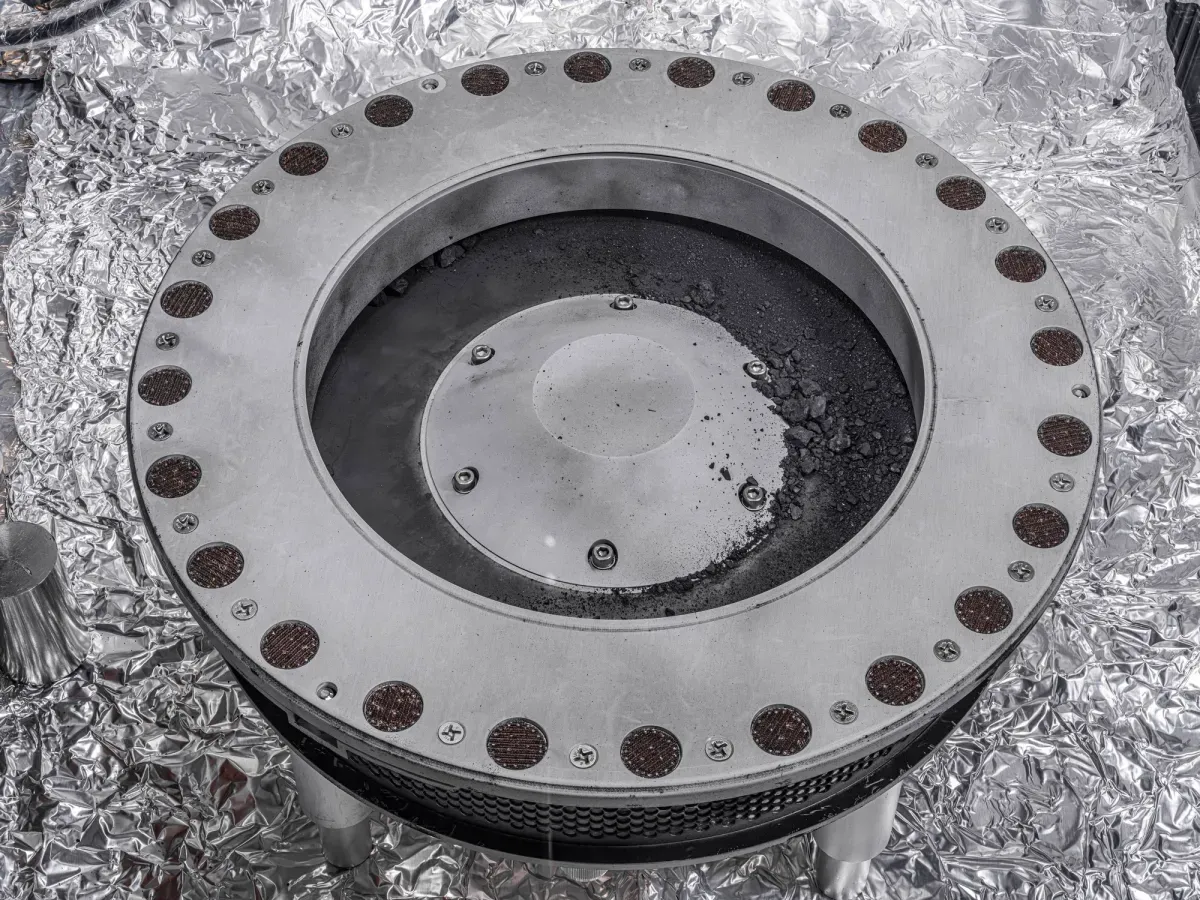
The NASA OSIRIS-REx mission hit a snag in Q4 as they had serious issues getting to the sample they returned from asteroid Bennu. While the collection mechanism had a lot of surplus material around it that exceeded their return goals, the mechanism itself was bolted closed by 35 bolts including 2 that refused to open. The NASA team had to develop new tools to mechanically remove these bolts in the enclosed glovebox environment they are using to retain the sample in its original state as much as possible.
For those that did not see the second flight test of SpaceX' Starship, it is worth watching! While they did not manage to hit all of their mission goals, it was a massive improvement to the first test earlier last year. No blowing up the launch pad, setting fire to the surrounding State Park, no engine issues and a clean separation between the booster and Starship itself.
Credit: SpaceX
A lot has been written about how transformative Starship will be for the industry, the best piece of which is still Casey Handmer's 'Starship is still not understood'. We are firm believers in its transformational impact long term, but more bearish about the short term impact. Most of the launch volume will be SpaceX launching for SpaceX (Starlink) or SpaceX launching for NASA (refueling for lunar missions may need up to 20 launches), while we expect to see a big difference in the cost for SpaceX and the price for everyone else.
Capital markets remain challenging, with most late stage companies struggling to raise even with a lot of structure and on flat valuations. Early stage seems to be in a much better spot though, now that valuations have come down and expectations around capital efficiency are more widely distributed.
High Frontier Mission Update
Our primary mission objective is defined as follows:
To rendezvous with an uncharacterized near-Earth Asteroid and showcase capturing regolith at kilogram scale, minimizing mission duration and cost.
This primary objective is combined with a number of secondary objectives that we see as stretch goals, ranging from the level of autonomy during flight operations to in situ characterization of regolith to the number of TAG (touch and go) excavation attempts. These goals drive our ConOps (mission design), spacecraft and payload architecture, flowing down into detailed technical requirements for components and elements of the mission that we verify using analysis and tests.
Our Design Reference Mission started from the Hayabusa2 and OSIRIS-REx missions that have successfully met parts of that primary mission objective, although focused on a science sample that is much smaller. This baseline has evolved through many iterations as we remove functionality (most of the science payloads) on the one hand and add functionality (zero-g mining/excavation, high performance propulsion) on the other. Not being an agency mission also helps as lot, as they are a lot of shortcuts we can take across the program that reduce cost and speed things up.
The cost profile for our reference mission has dropped from a $200m baseline ('repeat the agency mission with new features') by an order of magnitude. Primary drivers in that cost reduction:
- Launch (SpaceX rideshare instead of a dedicated rocket launch)
- Increased spacecraft power/delta-v (reduced mission duration/operations cost)
- Optimized architecture (no competing requirements, we are the customer)
- Shorter life/higher risk (design life of 2 years instead of 10+)
- Increased autonomy (small flight ops team)
The last element that has been instrumental is finding the right partners for our core components, both in terms of functionality and in terms of philosophy. We need to be scrappy for our mission to achieve its goals, which means we need to partner with groups that share that mindset.
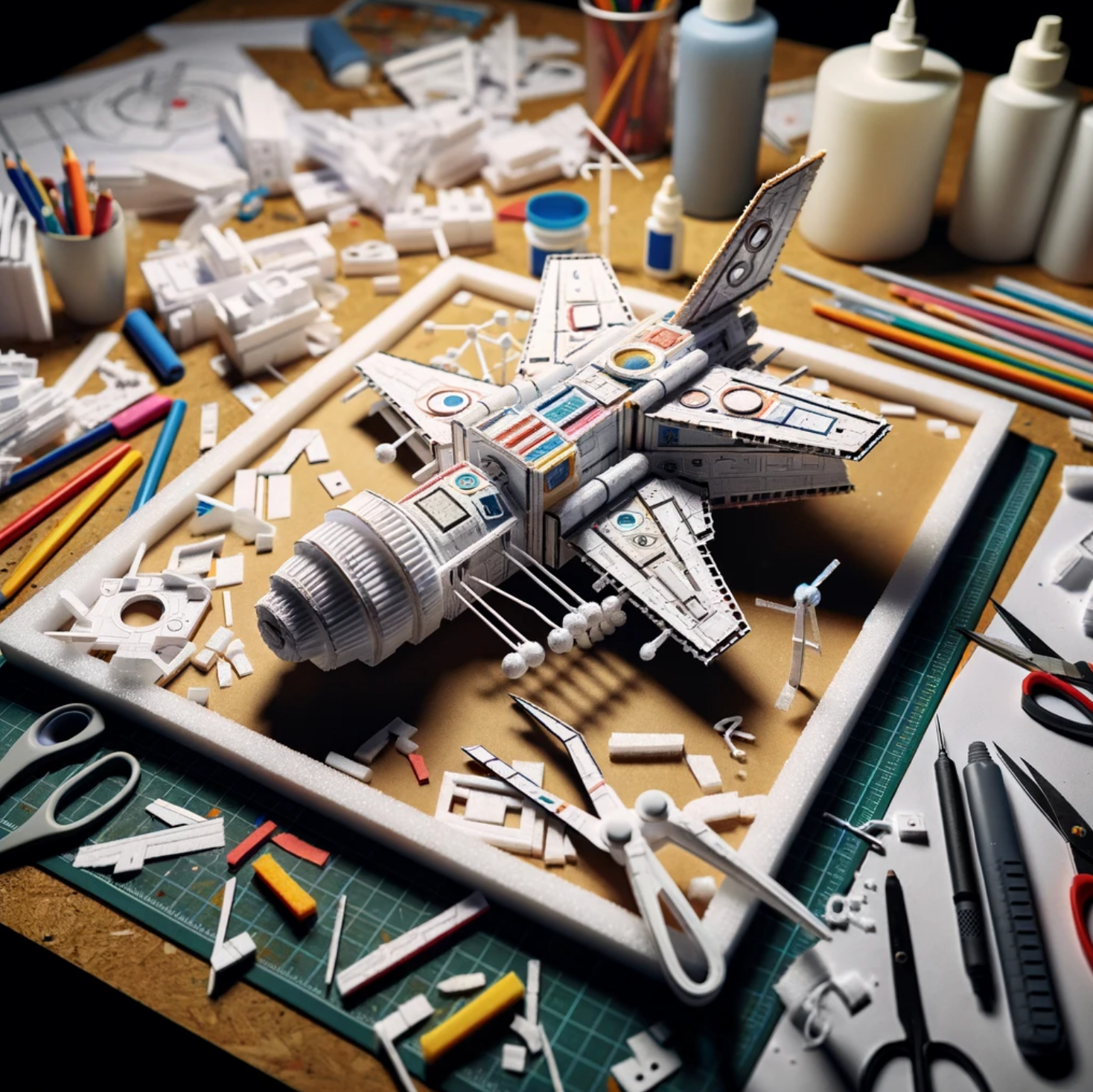
Karman+ team hackathon -> 1:1 scale spacecraft mockup
The timelapse video shows the architecture of our current spacecraft design, for which we are partnering with a vendor that will produce the bus for us. We made this mockup during a team planning session as a way for everyone to wrap their heads around the design and as a starting point to explore our payload designs (we kept the solar panels folded, they would not fit in our temporary space...).
Our excavation mechanisms will be mounted on a boom that extends from the spacecraft to ensure sufficient distance to the asteroid surface. We expect to use a bag as a scaleable capture mechanism, which will also contain the regolith for testing and characterization.
Excavation
For excavation we are converging on parallel tracks for continuous excavation, with a mechanical system (dubbed 'Hungry Hippo') that is great at grabbing and breaking rocks as well as an electromagnetic system (dubbed 'Magneto') that we expect will work very well to capture large amounts of smaller fines.
The main benefit of Hungry Hippo is its flexibility (it will work across everything from small fines to larger pebbles and rocks, while also being agnostic to the type of material captured). A downside is that grabbing material like this will also create a debris cloud, similar to what we saw with OSIRIS-REx.
The main benefit of Magneto is its precision (it should not create debris clouds but allow for focused excavation). A downside is that not all material will work due to its magnetic properties, nor will it be able to easily process larger objects.
The coming quarter is focused on running larger scale test campaigns for these mechanisms, while ensuring that we run digital simulations in parallel for verification.
Instruments -> Call for Proposals
We will incorporate our own instruments for regolith testing (mostly focused around chemical composition and water content) but also started a call for proposals as a way to engage with the scientific community as well as different industry groups.
We are going to evaluate the proposals we receive in the coming months, both for their feasibility and their ability to amplify what we are trying to achieve.
Team & Ops
We are still a holding pattern in our temporary lab space at York Street Yards, as the city of Denver is taking forever for our permit (185 days and counting). We thought getting 6000 sqft of office and lab space set up in an industrial building would be straightforward...
With our permit still in limbo (current best case is early February) we will still be in our current space by the end of this quarter. We're hoping Q2 will see us move into our new space.
Product Research
We are continuing our work on what basic and more advanced products can be created using regolith in space. Instead of bringing all of this in house, we're expanding our existing partnerships with Colorado School of Mines and TU Berlin, where some of the most established research in these fields happens.
Our Q4 Goals
Build-out of the different prototypes was done and we did define flight criteria, but we are still working on performance testing.
We did finish the development, but have not yet launched for external customers.
Our Q1 2024 Goals
Thanks for joining us on this adventure!
The Karman+ Team