

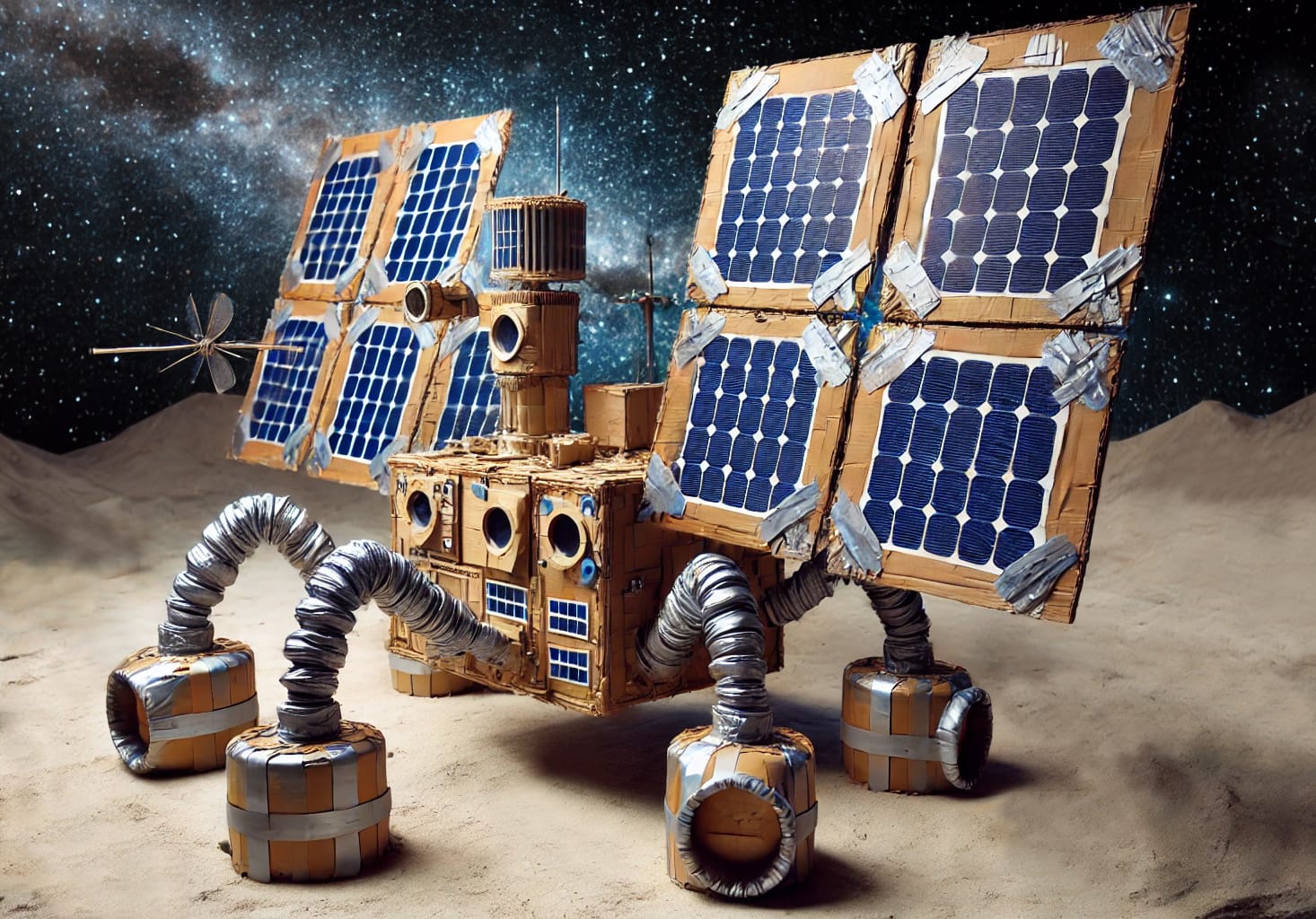
Welcome to "Poor Man's Guide to Deep Space Missions" – our detailed roadmap for space exploration on a shoestring budget. If you’ve ever gazed up at the stars and wondered what it would take to send a spacecraft out there, this guide is for you. Private companies generally don't share details about their approach, budget, roadmap or strategy leaving us with just the public data from space agency missions.
But you don’t need a billion-dollar budget or an army of scientists to achieve big things in space exploration. Whether you’re an amateur astronomer, a space enthusiast, or just curious about what it takes to venture into the unknown, this guide will walk you through our approach and roadmap of planning and executing a deep space mission with a (tiny) fraction of a NASA budget.
We’ll break down all of the different steps and design choices into understandable steps, offering practical advice on everything from designing a spacecraft to mission planning. We share how we make the most of limited resources, leverage open-source tools and leverage the community of citizen scientists who are already pushing the boundaries of space exploration.
In this first part, we’ll cover a baseline for space missions by looking in detail at 2 recent asteroid missions by JAXA and NASA. We compare these missions to the Karman+ High Frontier program, including an overview of our program budget.
Future posts will focus on deep dives into everything from launch and mission operations to component level analysis of the trades and choices we've made to design and build our spacecraft:
- Launch: Setting realistic goals and objectives for your deep space adventure.
- Designing and Building Your Spacecraft: Tips on constructing a spacecraft with readily available materials.
- Launching on a Budget: Exploring cost-effective options for getting your spacecraft off the ground.
- Navigating Deep Space: Understanding the basics of space travel and how to keep your mission on course.
- Communication and Data Collection: How to stay in touch with your spacecraft and gather valuable data.
Space development tends to be highly secretive, covered by confidentiality agreements for everything from specifications discussions to pricing between all parties. It is hard to draw lessons from past performance because data is often not made available or only shared when it paints a positive picture. This guide isn’t just about making space accessible – it’s about empowering you to become part of the next wave of exploration.
High Frontier vs Hayabusa2 vs OSIRIS-REx

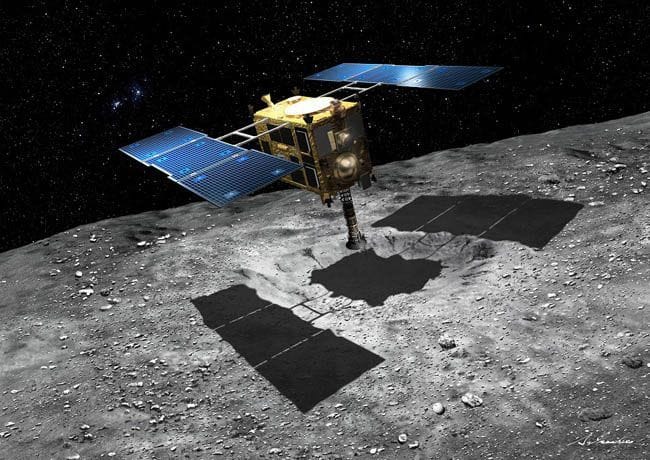

Left to right: High Frontier -> Hayabusa2 -> OSIRIS-Rex
This post is for subscribers on the K+ in depth tier only.
Subscribe now and have access to all our stories, enjoy exclusive content and stay up to date with constant updates.